


What Is Forest School? A Real Look at Learning Outside

If you've felt the pull to get your kids learning outside — really outside, not just recess between worksheets — you've probably run into the term forest school. It's having a moment, and for good reason. But underneath the trend is something old and simple that any family can practice without a program or a fee: the recognition that the outdoors is one of the best classrooms a child will ever have. Here's what forest school and outdoor learning actually are, and a set of activities you can take out the door this afternoon.
Forest school is an approach to education where children learn primarily outdoors, through regular, hands-on, child-led experiences in a natural setting — typically woodland, hence the name. Outdoor learning is the broader umbrella: any learning that happens in and through nature rather than inside four walls. Both share a conviction: that children learn deeply when they're outside, moving, exploring, and following their own curiosity in a living environment.

Why outdoor learning works
In our family, nature isn't an extracurricular — it's a primary teacher. And it teaches things a classroom structurally can't: patience, observation, interdependence, cycles, stewardship, presence, humility, and a kind of resilience that only comes from real weather and real terrain. It also does something to a child's body and nervous system that no indoor lesson does — it regulates, settles, and wakes up the senses worn dull by screens and stimulation.
There's also the plain developmental case: children outdoors move more, take more real risks (the good kind), problem-solve constantly, and engage every sense. The learning is embodied, which means it lasts. A child who meets a plant, a creek, or a season directly remembers it in a way no diagram delivers.
Forest school vs. just playing outside
Worth a quick honest distinction, because the term gets used loosely. Formal forest school usually means regular sessions, often with a trained leader, the same natural site over time, and a deliberately child-led, low-adult-direction approach. "Playing outside" is wonderful and you should do tons of it — but forest-school-style outdoor learning adds two things: regularity (the same place, repeatedly, through the seasons, so a relationship forms) and attention (a light frame that helps a child notice and engage, without turning nature into a worksheet).
The good news: you don't need to enroll in anything to capture most of the benefit. You need a patch of nature, repeated visits, and a willingness to follow your child's curiosity instead of directing it.
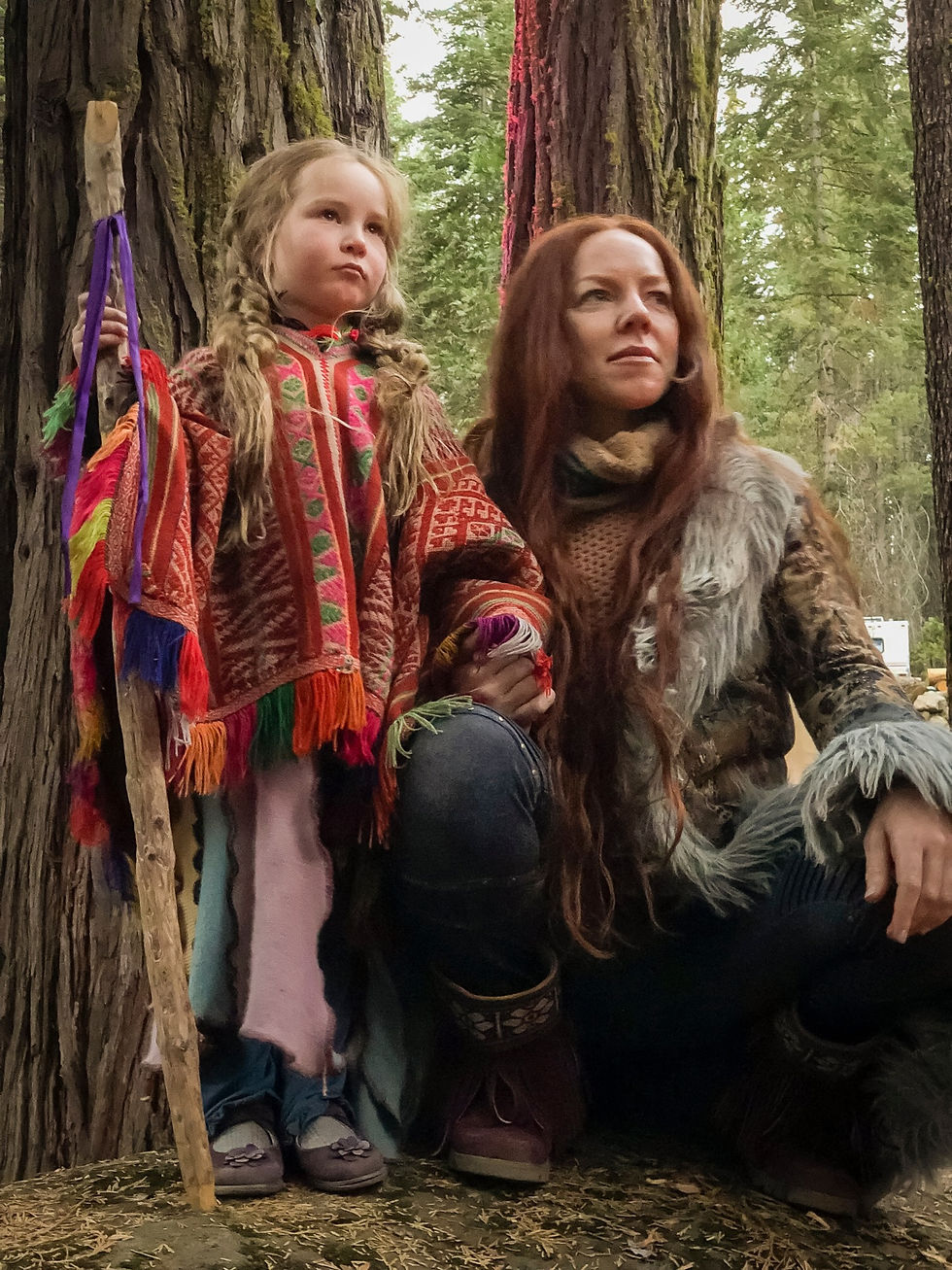
Outdoor learning activities to start today
Mix of seasons and ages — pick what fits your kids and your nearest patch of green:
Noticing & nature study
Adopt one tree and visit it through all four seasons; draw or photograph how it changes
Sit spots: everyone finds a spot, sits silently for a few minutes, and reports what they noticed
Identify and get to know one plant or bird at a time, deeply, rather than many shallowly
Keep a simple nature journal — sketches, found words, what the day smelled like
Hands-on & making
Build a fort, a fairy house, or a stick structure
Make mud, clay, or charcoal "paint" and create with it
Whittle (age-appropriate, supervised) or weave with grasses and bark
Build and tend a small fire safely; learn fire as a skill and a focus
Foraging, growing & food (with care)
Learn to identify a few safe, abundant local plants and what they're for
Harvest something seasonal and turn it into something (a tea, a snack) — knowing the short window is part of the lesson
Plant a small garden bed or a few seeds and tend them over time
Movement & sensing
Barefoot walking on varied ground; balancing on logs; climbing
A sound map: close eyes, mark each sound's direction on paper
Track an animal — look for prints, feathers, chewed leaves, signs something lives here
Reverence
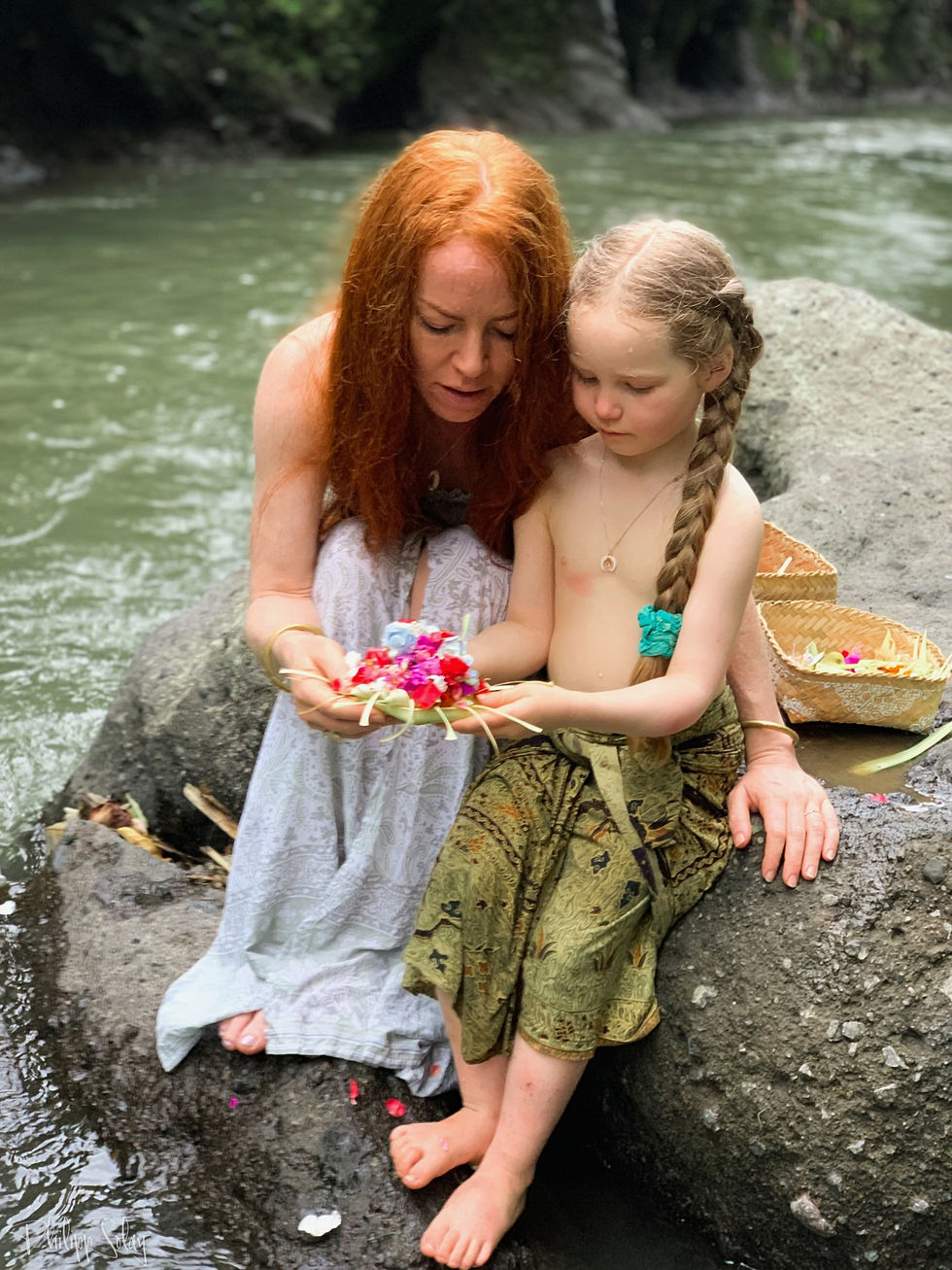
Greet the place when you arrive; thank it; leave it better than you found it
Choose one living thing to simply observe and honor
A real day for us has looked like meeting three plants at the beach — yarrow for boundaries, artemisia for dreaming, poison oak for practicing exactly where and how you step — or harvesting wild milky oats in their short window and boiling them into a creamy drink. No worksheet. That was school, and it was enough.
A note on screens and the outdoors
I'm not anti-technology — I'm pro using AI to learn fast and compress time, then closing the laptop and getting outside. Outdoor learning is the deliberate other half of a screen-aware life: the reclaimed hours go here, into the body and the living world. Learn through the screen efficiently; then go meet a tree.
Frequently asked questions
What is forest school?
Forest school is an educational approach where children learn mainly outdoors, through regular, hands-on, child-led sessions in a natural setting — classically woodland. It emphasizes returning to the same place over time, real risk and exploration, and following children's curiosity rather than delivering a fixed lesson.
What's the difference between forest school and outdoor learning?
Forest school is a specific, structured approach (regular sessions, often a trained leader, the same site over time, child-led). Outdoor learning is the broader category — any learning that happens in and through nature. Forest school is one formal expression of outdoor learning; you can practice outdoor learning informally as a family without a program.
What are good outdoor learning activities for kids?
Adopt and observe one tree through the seasons; sit spots and sound maps; getting to know a single plant or bird deeply; nature journaling; building forts and fairy houses; safe foraging and seasonal harvesting; whittling and fire-tending (supervised); barefoot balancing and climbing; and tracking animal signs. Mix noticing, making, and movement.
Do I need a forest school program to do this?
No. While formal programs are valuable, most of the benefit comes from two things you can do for free: visiting the same patch of nature regularly (so a relationship forms across seasons) and following your child's curiosity with a light frame rather than directing it. A backyard, park, or local trail works.
Is outdoor learning better than classroom learning?
It's not about better or worse — it's that the outdoors teaches things a classroom structurally can't: embodied, sensory, real-stakes learning plus nervous-system regulation, observation, and resilience. Many families use outdoor learning as a primary mode precisely because it engages the whole child in ways indoor instruction doesn't.
(Related: Reconnecting With Nature · What Is Unschooling?)
If this is where you are, I wrote a free guide for it: 100 Days in Nature.
— Bronwyn Ayla, L.Ac.

Comments