


Family Gap Year: How to Take a Year With Your Kids You'll Never Regret

A family gap year is a deliberate year (or season) stepping out of the default, school, schedule, commute, to travel, live differently, and let the world be your family's teacher. It sounds radical until you run the numbers and logistics, and then it turns out to be one of the most achievable extraordinary things a family can do. My daughter and I have built our whole life on the traveling-and-learning premise, Bali, volcanoes, rice fields, elders, months at a time on the road, so here's how a family gap year actually works.
Why families do it
The reasons are usually some blend of: the kids are the right age and it will never be easier; the parents can work remotely or take leave and the window is open; the family is exhausted by the pace of default life and knows there's more; or something has cracked, a job ending, a move, a loss, and the family decides to turn disruption into adventure.
Underneath all of them is the same recognition: childhood is short, the world is enormous, and the default path will consume the whole thing if you let it.
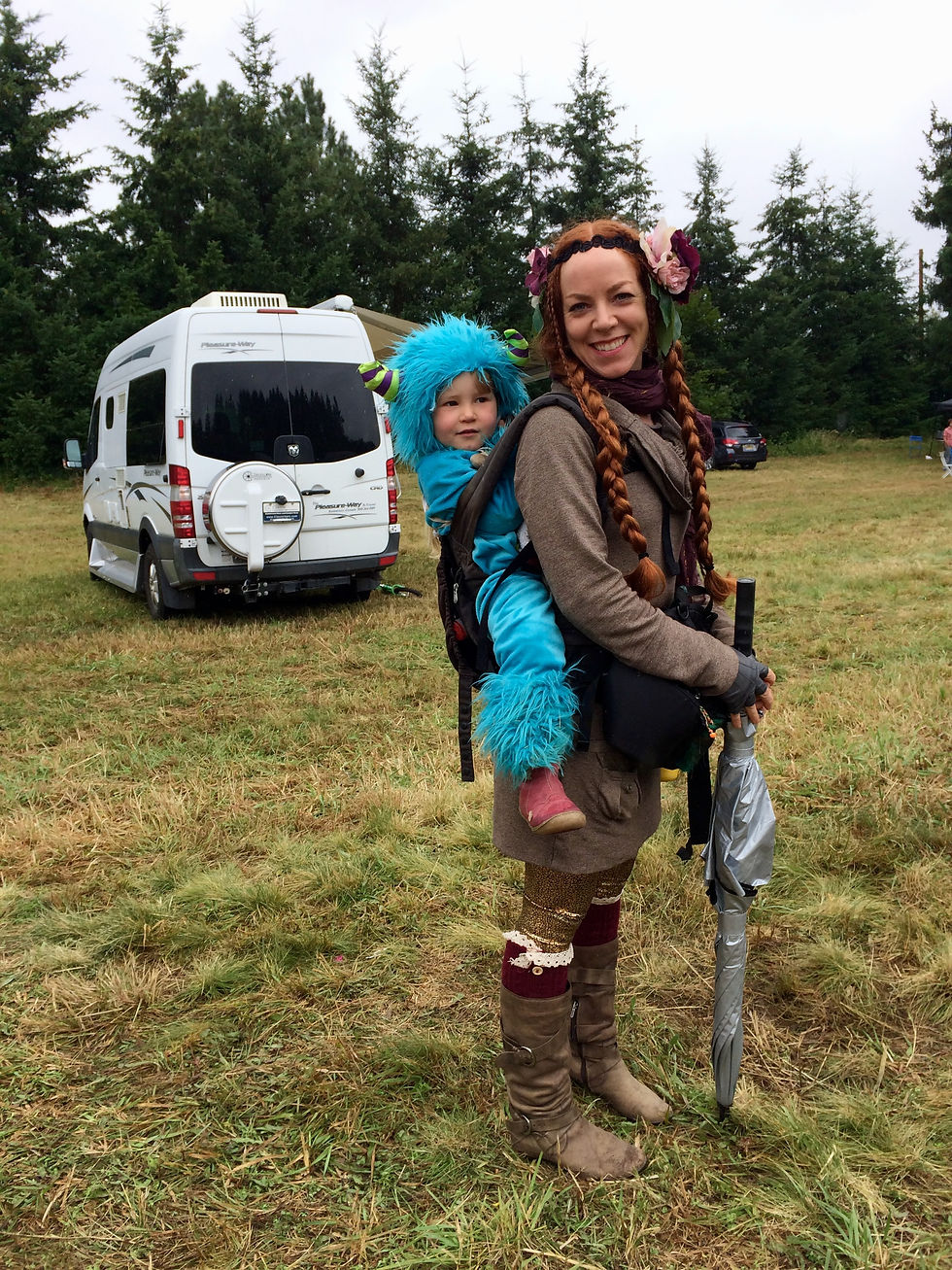
What kids actually gain
A year in the world gives children things a classroom can't approximate: languages absorbed by need, cultural fluency, adaptability, ease with strangers and elders, geography and history met in person, and the deep security of concentrated family time. This is worldschooling, the world itself as the curriculum, and a gap year is its most accessible form: a defined container with a beginning and an end, rather than a permanent lifestyle change.
Kids also gain something subtler: the lived knowledge that the default is optional. A child who has watched her family design a year on purpose never fully believes that life is something that just happens to you. That's a dangerous, wonderful thing to know at ten.
The money
The assumption is that a family gap year requires wealth. The real math: many families spend the same or less traveling than they do at home, because slow travel in affordable regions (Southeast Asia, Latin America, parts of Europe) costs less than a mortgage-and-activities life in an expensive city, especially if you rent out your home while you're gone. The big levers: travel slowly (monthly rentals, not hotels), choose affordable regions, cook, and treat it as living elsewhere rather than a year-long vacation.
The other model is the working gap year: one or both parents working remotely part-time while the family travels slowly. That's not time off; it's life redesigned, funded as you go.
(None of this is financial advice, run your own real numbers. But run them before you assume the answer is no.)
School, legally
For U.S. families, a gap year usually means filing as homeschoolers in your home state and then educating however you choose on the road, for many families, that's worldschooling/unschooling: letting the journey itself teach, with a light log or portfolio if your state requires records. Rules vary by state and country, so check your specific requirements before you leap. Kids re-enter school afterward all the time; schools handle returning travelers far more routinely than the worry suggests.
Shapes a gap year can take
The full loop. Sell/rent the house, one big arc, several countries, several months each.
The home base. One affordable country as anchor for six to twelve months, side trips from there. Deeper relationships, lower cost, less packing.
The season. Not ready for a year? Three months is a gap season, and it delivers a shocking percentage of the value.
The working wander. Remote work plus slow travel, indefinitely or for a set year.
There is no correct shape. There's only the one your actual family, budget, and nerve can say yes to.
The hard parts
Togetherness is relentless, you will be with your children more than you have ever been, which is the point and also, some days, a lot. Logistics gets tiring. Kids miss friends. Somewhere around month three the novelty dips and you have to build rhythm, school-of-life mornings, slow weeks, ordinary days, because a year cannot be a highlight reel. Families who thrive treat the gap year as a life being lived elsewhere, not a vacation being stretched.
And then it ends, and no one is who they were, in the best way. Ask any family who's done it what they'd change, and the most common answer is: we would have gone sooner.
Frequently asked questions
What is a family gap year? A family gap year is a deliberate year (or extended season) stepping outside the default of school and work to travel and live differently as a family, usually combined with homeschooling or worldschooling so the journey itself becomes the children's education.
How much does a family gap year cost? It varies enormously, but many families spend the same or less than their at-home cost of living by traveling slowly in affordable regions, using monthly rentals, cooking, and renting out their home while away. Budgets commonly range from modest (Southeast Asia, slow pace) to premium (multi-continent, faster pace). Run your own numbers, the answer is more achievable than most families assume.
What about school during a family gap year? Most families file as homeschoolers in their home state (or country equivalent) and educate on the road, often through worldschooling, where the travel itself is the curriculum. Requirements vary by state and country, so verify yours. Children re-enter conventional school afterward routinely.
What's the best age for a family gap year? There's a case for every age: little ones are portable and free/cheap to fly; middle childhood (roughly 6 to 12) is the sweet spot many families choose, old enough to remember, young enough to be enchanted; teens gain independence and perspective. The best age is the one your actual window allows.
Is a family gap year worth it? Families who take one overwhelmingly report it as a defining, zero-regret experience: deeper family bonds, transformed kids, and a permanently widened sense of what life can look like. The most common reflection is "we should have done it sooner," not anything about cost or logistics.
If a year feels too big to start with, start with a taste: come on a retreat with us, families traveling and learning together, the world as the teacher, with the container already built.
If this is where you are, I wrote a free guide for it: Worldschooling Starter Guide.
Bronwyn Ayla, L.Ac.


Comments