


Rites of Passage: What Modern Children Are Missing and How to Bring Them Back

Something in our kids is hungry for a threshold we mostly stopped offering. Modern childhood has milestones — birthdays, graduations, a driver's license — but it has very few real rites of passage: marked, witnessed, meaningful crossings from one stage of being into the next. We've kept the logistics and lost the ceremony. And children feel the absence, even when they can't name it. Here's why rites of passage still matter, and how to bring them back into your own family without needing a tradition handed to you.
A rite of passage is a ceremony or experience that marks a person's transition from one life stage to another — birth, coming of age, marriage, eldership, death. Anthropologists describe a shape to them: a separation from the old role, a threshold or in-between time of testing and transformation, and a return in which the person is recognized by their community as someone new. Across virtually every traditional culture, these crossings were marked deliberately. Ours mostly aren't.
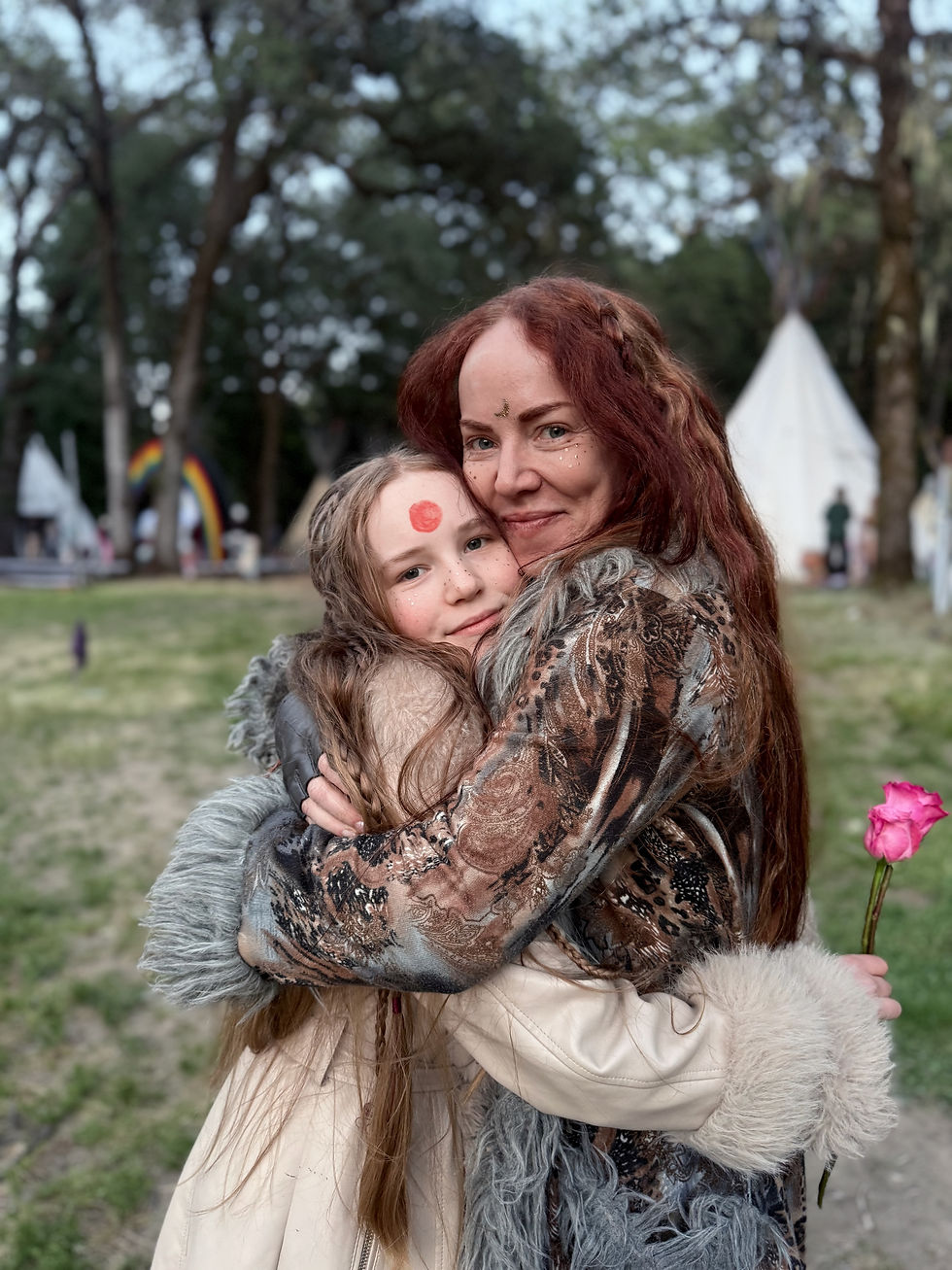
What we lost when we stopped marking thresholds
For most of human history, a child didn't have to wonder when she'd become a woman, or whether her growing up mattered to anyone. The community told her, through ceremony. The crossing was witnessed. She came back changed and was met as changed.
When those rites fade, a few things happen. Transitions blur — a person can reach adulthood without ever having been recognized as an adult, which is part of why so many of us arrive at thirty still unconsciously waiting for permission to be grown. Belonging weakens, because rites of passage are also how a community says you are one of us now. And meaning thins out — without thresholds, life becomes one long undifferentiated stream of days, and the soul loses its sense of arc.
This is the same rupture I keep coming back to in everything I teach: we were trained to consume life rather than participate in it, and ceremony is one of the most ancient technologies of participation. A rite of passage isn't decoration on top of a transition. It's how a human being is helped to actually cross.

Rites of passage aren't only the big ones
We tend to think rites of passage means the dramatic, capital-C ceremonies — a vision quest, a bar mitzvah, a wedding. Those matter. But a family can offer thresholds at every scale, and the small, repeated ones may do as much quiet work as the large ones.
The clearest example in our home is menstruation. Most girls are handed their first period as a clinical mess — something secret to hide and clean up, with a drawer of products to manage it. My daughter and I have been doing the opposite: rebranding menarche as a sacred portal, an invitation into a time of ceremony, introspection, and connection with your sisters — being in a more sacred way around the body in this incredibly potent time of the month. Same biological event. Completely different threshold. One says hide this. The other says you are crossing into something, and we see you.
That's the move, and it scales to anything: a first solo journey, a big birthday, the loss of a grandparent, a child taking on real responsibility for the first time, the turning of a season. The question is never whether a transition is happening. The question is whether anyone marks it.

Family rituals: the everyday version
If a rite of passage marks the big crossings, family rituals mark the daily and seasonal ones — and they're where most of us can actually start. A ritual is just a routine held with reverence; the difference between the two is entirely the quality of attention you bring. Anything can become sacred by the way you relate to it.
Here's one from our mornings. We wake and greet the sun. We say hello to the earth. We greet the water. We call in the four directions. We listen to the morning chorus of the birds — and on special mornings, the foxes come and say hello to us. We ring a bell to clarify our minds and call in help. None of that is preparation for the day. It is the day, held as sacred.
You don't need our particular form. The point is the posture. Family rituals can be a candle at dinner, a blessing before a trip, a seasonal walk you take every solstice, a song at bedtime, an offering left for the land. What makes them powerful isn't elaborateness — it's repetition and reverence. Children raised inside ritual grow up knowing in their bones that life has rhythm, that thresholds are real, and that their crossings are witnessed.
How to create your own (without a tradition to inherit)
A lot of modern parents feel disqualified here — I don't have a lineage, I'd be making it up. You're not disqualified. You're at the beginning of a tradition instead of the middle of one. A few honest starting points:
Notice the transition you want to mark. A coming-of-age, a first big responsibility, a leaving or arriving, a seasonal turn. Name what's actually crossing.
Borrow the ancient shape, not someone else's content. Separation (step out of the ordinary — a special place, a fast, a night apart). Threshold (something is faced, learned, or given — a task, a teaching, a vigil). Return (the person is welcomed back and recognized as someone new). You can honor that arc with materials entirely your own.
Make it embodied and witnessed. The body needs to register the crossing — through place, gesture, fasting, adornment, making something with your hands. And someone needs to see it. A rite witnessed by even one loving adult lands differently than a private milestone.
Draw on lineage if you have it — respectfully. Many of us carry ancestral or indigenous-influenced threads (in our family, offerings and the honoring of an animate universe come through Dagara teaching). Honor what's genuinely yours, learn with humility where you're a guest, and don't appropriate. Reverence travels; costume doesn't.
Keep it real, not perfect. A rite of passage doesn't need to be elaborate to be true. A candle, a walk, a few honest words of recognition, and a child who is seen crossing — that's already the whole thing.
My prayer in all of it is simple: that by raising children to hold life as sacred, they grow into adults who keep that reverence, and cultivate right relationship with the earth and each other. Rites of passage are how we hand that forward.
Frequently asked questions
What is a rite of passage?
A rite of passage is a ceremony or experience that marks a person's transition from one life stage to another — such as coming of age, marriage, or becoming an elder. They traditionally follow a three-part shape: separation from the old role, a threshold or transformative in-between, and a return in which the community recognizes the person as someone new.
Why are rites of passage important?
They help people actually cross a transition rather than drift through it unmarked. Rites of passage clarify identity (you know you've become something new), strengthen belonging (your community recognizes the change), and give life meaning and arc. Without them, transitions blur and people can reach adulthood still unconsciously waiting for permission to be grown.
What are some examples of modern rites of passage and family rituals?
Coming-of-age ceremonies (including reframing a girl's first period as a sacred threshold rather than a clinical event), milestone birthdays, a first solo journey, taking on real responsibility, and honoring loss. Everyday family rituals — a morning greeting of the sun and earth, a candle at dinner, seasonal walks, blessings before travel, bedtime songs — mark the smaller, repeating thresholds.
What's the difference between a ritual and a routine?
The quality of attention. A routine is something you do; a ritual is the same act held with reverence and meaning. Anything — a meal, a walk, a morning greeting — can become a ritual by the way you relate to it. Repetition plus reverence is what turns routine into ritual.
How do I create a rite of passage for my child if I don't have a tradition?
Notice the transition you want to mark, then borrow the ancient three-part shape — separation, threshold, return — and fill it with content that's genuinely yours. Make it embodied (place, gesture, making something) and witnessed by at least one loving adult. Draw on your own lineage respectfully if you have one. It doesn't need to be elaborate to be real.
Ceremony is one of the deepest pillars of the way we live and learn. (Related: What Is Unschooling?)
If this is where you are, I wrote a free guide for it: The Deschooling Reset.
— Bronwyn Ayla, L.Ac.


Comments